Wednesday, January 19, 2011

The Yamas: Expounded


In continuation of my previous blog entry, The Yamas, I thought I would include a worksheet from my Advanced Yoga Studies program that I found very helpful on how to incorporate the Yamas into life. These are not my own words, they are directly from the worksheet: This comment is an example of Asteya!

Ahimsa: Non-violence

Thought (Mental-Baudhika)
  • What is destructive to happiness, peace of mind, dreams, contentment.
  • Look at violent thoughts: anger, jealousy, envy, self-criticism, etc.
Word (Verbal - Vachika)
  • Verbal Violence longer-lasting than physical. Damages self as well as others.
  • Consider impact of words before speaking.
Deed (Physical - Sharirik)
  • Includes violence against others and self.
  • Consider effects of self-destructive behavior. Usually begins as mental attitude.

Satya: Non-lying, Truthfulness


Thought (Mental-Baudhika)
  • Seek out own truth without dogma or judgment of others.
  • Know that all truth is subject to bias of body and mind.
Word (Verbal - Vachika)
  • Speak with listener in mind.
  • Speaking truth means it is a dialog.
  • Be as unbiased a vehicle for the teachings as possible.
Deed (Physical - Sharirik)
  • Be aware of how body correlates to internal states. Bring unity to thought, word and deed to communicate truth.

Asteya: Non-stealing


Thought (Mental-Baudhika)

  • Refrain from taking anything that is not yours, includes someone else's happiness, special moment, ideas, way of life, beliefs
Word (Verbal - Vachika)
  • Do not pretend someone else's words, ideas, thoughts are your own.
  • OK to borrow language to effectively communicate.
  • Give credit to originator of your words.
Deed (Physical - Sharirik)
  • Take as little as possible from environment to maintain balance. Bring balance to body by not forcing an asana you have not earned.

Brahmacharya: Non-sensuality


Thought (Mental-Baudhika)
  • Become the master of your own creative force.
  • Harness and direct the energy of creation.
  • Keep energy in balance while giving it proper expression.
  • Feel the bliss of being one with creation; part of Life.
Word (Verbal - Vachika)
  • Choose words carefuly with respect for how they affect others.
  • Use language to discover the harmonious expression of creative drives.
  • Listen as well as speak.
Deed (Physical - Sharirik)
  • Find balanced way to express creative and procreative drives, depending on time, place and position.

Aparigraha: Non-greed


Thought (Mental-Baudhika)
  • Release thought patterns which no longer serve you.
  • Take into your consciousness only what is needed and keep it there only as long as it is useful.
Word (Verbal - Vachika)
  • Communicate clearly and concisely.
  • Be a good listener.
  • Be less greedy with thoughts and words so that you can really listen to the teachings of Life.
  • Be quiet enough to hear.
Deed (Physical - Sharirik)
  • Evaluate what you need versus what you want. This subjective and dynamic.
  • In practice, refrain from taking too much from asana.
  • Pain and suffering which has not yet occurred can and is to be avoided.

Tuesday, November 23, 2010

Chakras


The body consists of a network of energy channels (nadis) where energy (prana) circulates. One channel runs along the axis of the body, from the base of the spine to the crown of the head. In the ordinary individual this central channel of subtle energy is said to be mostly inactive. One purpose of Hatha Yoga is to clear this channel of any obstructions. The energy then can flow freely leading to better health and higher states of consciousness. When this channel is activated it sets the six chakras in motion. Chakras are psychoenergetic centers which are aligned along the central channel.

The Six Chakras


Muladhara
"Root Prop"
Location: at the base of the spine.
This center is connected with elimination as well as fear.
Earth
Adrenal
Center of stability
Security
Sense of self


Svadhisthana
"Own Place"
Location: at the genitals/sacrum
This center is connected with urogenital functions, but also with desire.
Water
Taste
One's own

Manipura
"Jewel City"
Location: at the naval/solar plexus
This center distributes the life force to all parts of the body and is especially involved in the digestive process and willpower.
Fire
Sight

Anahata
"Unstruck"
Location: in the middle of the chest.
This center is also called the "heart chakra." is the place where the "unstruck" or inner sound can be heard in meditation. It is also linked with love.
Air
Touch/skin
Thymus

Vishuddha "Pure"
Location: at the throat
This center is associated with speech and greed.

Ajna
"Command"
Location: between eyebrows/third eye
This center is the contact place for the guru's telepathic work with disciples. Also associated with the experience of higher states of consciousness.

Sahasrara
"Thousand-spoked"
Location: crown of the head
Special chakra is associated with higher consciousness, notable ecstatic state.
Beyond all elements
Hypothalamus
1000 petal lotus

Yoga Sutras: Citta Vrtti

Sutra 1.6:
Citta Vrtti (movements in the consciousness) which cause pleasure or pain are:

Pramana: clear perception
Viparyaya: misperception
Vikalpa: imagination
Nidra: deep sleep
Smrti: memory

Sutra 2.3
The five causes of chitta vrrti creating pain (klesah):

Avidya: ignorance
Asmita: ego
Raga: attachment
Dvesa: aversion
Abhinivesah: love of life; fear of death

"As breeze ruffles the surface of a lake and distorts the images reflected therein, so also the chitta vrtti disturb the peace of the mind. The still waters of a lake reflect the beauty around it. When the mind is still, the beauty of the Self is seen reflected in it. The yogi stills his mind by constant study and by freeing himself/herself from desires. The eight stage of Yoga teach him/her the way." - BKS Iyengar

Friday, October 22, 2010

The Niyamas


The niyamas are the second limb of yoga. They are rules of conduct towards oneself that consist of certain disciplines which are both physical and mental. These individual ethical observations that can help harmonize our inner lives. They are:

1. Saucha: cleanliness; both inner and outer
2. Santosa: contentment
3. Tapas: discipline
4. Svadhyaya: self-study
5. Ishvara Pranidhana: self-surrender

The niyamas, like the yamas, can be practiced both in our daily lives and also in our yoga practice. For example, finding time to practice is difficult. You require discipline (tapas) to make time and practice your asanas. This in turn cleanses your body (saucha) making you feel content (santosha) with your practice. Since you are practicing more frequently, you make more accurate observations (svadhyaya) on your asanas and surrender (ishvara pranidhana) yourself to the study of yoga.

When your living space and the food you eat is clean (sauca), you can concentrate and focus more clearly. Being discontent only breeds envy and unhappiness, whereas practicing an attitude of gratitude (santosa) results in living a happy existence. Discipline (tapas) is everything in yoga from disciplining to practice the asanas, the yoga sutras, and becoming a better human being. Studying (svadhyaya) your actions and how you react to situations will give a clearer understanding why you do the things you do and how to avoid conflict by merely reacting. Knowing that the world is more than oneself (isvara pranidhana) is spiritually enlightening.

The Yamas


The Yamas are the first limb of yoga. They are moral rules for society. If followed, they bring peace and harmony in the world. The Yoga Sutra of Patanjali offers these five Yamas (Sutra 2.30):

1. Ahimsa: non-violence
2. Satya: non-lying
3. Asteya: non-stealing
4. Brahmacharya: moderation
5. Aparigraha: non-greed

Each of the yamas manifests on three levels:
  • Mental: mindfulness of what we think
  • Verbal: mindfulness of what we say
  • Physical: mindfulness of what we do

Below are examples from my advanced studies class on how to practice and contemplate the yamas.

Sutra 2.35 Ashimsa: In the presence of one practicing ahimsa, hostility can not exist.
  • Example of mental ashimsa - When I think negative thoughts about someone, I will take time to notice why I am thinking this way, striving to understand that the person behaves the way he does because of previous life experience.
  • verbal ashimsa - When someone insults or criticizes me, how do I feel and why do I allow those words to affect me? Can I ignore them, or investigate why they are being said?
  • physical ashimsa - When I witness violence or become afraid, can I use discernment to decide for myself if and to what extent I should be involved?

Sutra 2.36
2. Satya: Truthfulness secures confidence in the results of an action
  • mental satya - I will be honest with myself instead of thinking I should be feeling another way.
  • verbal satya -
  • physical satya - When I

Sutra 2.37
3. Asteya: Prosperity comes to one who does not steal.


Sutra 2.38
4. Brahmacharya: When practicing non sensuality, vitality is obtained.


Sutra 2.39
5. Aparigraha: When no longer grasping for things, we discover why we are born.

More on Sankhya Philosophy

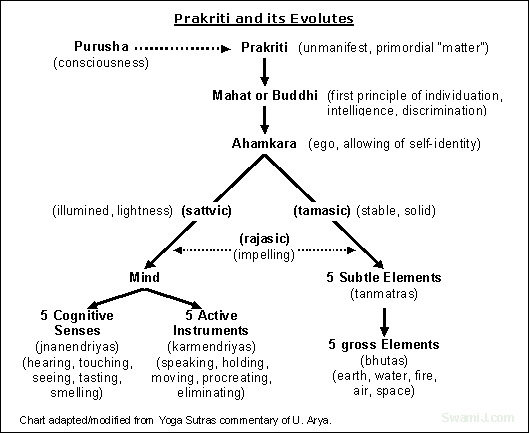
Sankhya is a dualistic philosophy. The dualism is between the self and matter whereas in the West, its between mind and body. Sankhya has their own version on how they think life emerged in the universe similar to "The Big Bang Theory." They regard the universe consisting of two realities:

Purusha (consciousness; self) and
Prakriti (matter)

Purusha is the Transcendental Self or Pure Consciousness. It is absolute, independent, free, imperceptible, unknowable, above any experience and beyond any words or explanation.

Prakriti is the first cause of the universe of everything (expect Purusha). Prakriti evolves itself successively into twenty four tattvas (principles). It's composed of three characteristics (gunas):

  1. Sattva: a template of balance or equilibrium; characterized by purity, luminosity, lightness, harmony and the production of pleasure.
  2. Rajas: a template of expansion or activity; endeavor, energy, movement, producing pain. Impel and energizes overcoming stagnation.
  3. Tamas: template of inertia or resistance to action; stability, stagnation, dullness, darkness, stasis, stupor.

Thursday, October 21, 2010

Eight Limbs of Yoga

Yoga isn't exclusively a physical practice, it is also a mental and spiritual one. The postures (asanas) are one of 8 components, stages of yoga, know as Ashtanga Yoga. More of each limb later.

Yoga Sutras 1.1 - 1.4

The first four Sutras in the first section, I. Samadhi Pada, define Yoga.

How to read the following Sutras:
First, the italicized phrase is the actual Sutra, as you can see they read like poetry.
Then each word of the Sutra is broken down and translated.
Finally, the Sutra is translated. There are numerous translations and in-depth dissertation on the Sutras.

Sutra 1.1
atha yoga anusasanam

atha: now, a prayer, a blessing
yoga: joining, union, deep meditation, concentration
anusasanam: instruction, teaching, introduction


Now, the teachings of yoga

With prayers for divine blessings, now begins as exposition of the sacred art of yoga.

This introductory Sutra suggests that after our many actions in life, now we are finally ready to pursue the depths of self-exploration, the journey directly to the center of consciousness, Ataman or Self, our eternal and True identity.


Sutra 1.2
yogah cittavrtti nirodhah

yoga: union
citta: sum total of mind, consciousness (mind + intellect + ego)
vrtti: state of mind, fluctuations in mind
nirodhah: process of ending, to cease, to still


Yoga is the cessation of movements in the consciousness.

Yoga is to still the pattering of consciousness.

Yoga is the ability to direct and focus mental activity.

In a systematic process of meditation, you gradually move your attention inward, through all the levels of your being, gaining mastery along the way.


Sutra 1.3
tada drastuh svarupe avasthanam

tada: then at that time
drastuh: the soul, the seer, pure awareness
svarupe: in essence, in own form or nature
avasthanam: rests, abides, dwells, resides, radiates


Then, the seer dwells in his own true splendor

With the attainment of a focused mind, the inner being establishes itself in all its reality.

As a result of having done the process of nirodhah, described in Sutra 1.2, the true Self stands alone, unencumbered by our many false identities, described in Sutra 1.4. The process is not one of attaining something we do not have, but of removing the clouds, so to see the light that is already there.


Sutra 1.4
vrtti sarupyam itaratra

vrtti: fluctuations in mind
sarupyam: conformity, identification
itaratra: otherwise, at other times


At other times, the seer identifies with the fluctuating consciousness.

Otherwise, we identify with the activities of the mind.


When we do not experience pure consciousness or the rest of time, the mind flows towards our sensory experiences, memories and fantasies. The pure consciousness mistakenly takes on the identity of those thought patterns. We incorrectly come to think that who we are is one and the same as these thoughts.

Wednesday, October 20, 2010

Sankhya Philosophy

The oldest known philosophical teachings of India are found in the Vedas. The Vedas are four books that describe the philosophy and practices of the Vedic people who lived approximately 5000 years ago in Ancient India. Six primary Indian philosophies emerged; they are called six darshanas. Darshana means “to look at” and “points of view which represent the varied phases of the truth viewed from different angles of vision.” The six schools are often grouped together:

Nyaya + Vaisheshika

Sankhya + Yoga
Mimamsa + Vedanta

Sankhya Philosophy, grouped with Yoga, is considered to be the oldest of the six schools founded by Sage Kapila. These writings are very old and lost in antiquity. What we know of the philosophy is through his students and their later writings. *Fun fact: Before Buddha’s enlightenment, one of his primary teacher’s was a Sankyic scholar hence Sankya’s influence on Buddhism.

Sankhya is considered to be a moksha shastra, a philosophy whose purpose is to teach how one can be come liberated. The primary practice of Sankhya is the deep contemplation on the tattvas, the 24 principles of existence. This leads to the state of Samadhi, the realization of the true self.

Sankhya considers the cultivation vairagya to be pivotal to the teachings. Vairagya is non-attachment or dispassion. “Ranj” means “to color.” Think of a clear crystal. When you place it near a colored object the crystal looks like that color. The mind also takes on the color of the “vrtti” (modifications) it is in contact with. Every thought you think, every reaction you have in life colors or shapes the mind. You identify with the mind. You create a persona that is not reflective of your true Self, which is pure consciousness.

Sankhya states that there are three causes of pain:
  1. Adhyatmika (pain we create ourselves)
  2. Adhibautika (pain created outside of me)
  3. Adhidaivika (pain created by supernatural causes).
Sankhya also believes that the only way to permanently end pain and suffering is to know the true Self.

Yoga Sutras, A Beginning

The Yoga Sutras of Patanjali can be sumarized as a users manual on how to be a complete being.

We are studying the Yoga Sutras through Iyengar’s book, “Yoga Sutras of Patanjali.” The yoga philosophy was first described in the Yoga Sutras (sutra means thread), a collection of 196 aphorisms written by the Indian sage, Patanjali as the foundation of the philosophy and practice of yoga. Patanjali describes the enigma of human existence and shows how, through yoga practice, we can transform ourselves, gain mastery over the mind, emotions, and overcome obstacles to our spiritual evolution and attain the goal of yoga, liberation from the bondage of worldly desires and actions, and union with the Divine.

Patanjali lived between 500 and 200 B.C. He is noted for yoga sutras (health of the mind) along with grammar (clarity) and Ayurveda medicine (health). Traditional representation of Patanjali is seen as a deity with the hood of a cobra and lower body as the tail of a snake.

The Sutras are unique because they are not dogmatic and anyone from any religion can appreciate and study them. They are for all, if one is open to it.

There are four books/chapters or Padas (Sanskrit word) in the Yoga Sutras.

I. Samadhipadah (Samadhi Pada): Concentration

Yoga is defined along with the movement of the consciousness (citta vrtti) and the various disciplines by which they may be stilled. The goal of yoga is Samadhi, blissful enlightenment; the last stage of the eightfold path of yoga.

II. Sadhanapadah (Sadhana Pada): Discipline
Sadhana is the Sanskrit word for “practice” or “discipline”. In this section Patanjali outlines Kriya Yoga (Yoga of Action) + Ashtanga Yoga (Eight limbed Yoga).

III. Vibhutipadah (Vibhuti Pada): Result of Discipline + Techniques
Vibhuti is the Sanskrit word for “power” or “manifestation.”

IV. Kaivalyapadah (Kaivalya Pada) Freedom + Liberation
This section describes the nature of liberation and the reality of the transcendental self.

Ganesh Puja


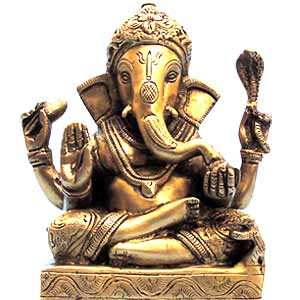
On our first class, we participated in a Ganesh Puja. A Puja is a Hindu ritual as an offering for various deities. We started our program with a Puja because we wanted to receive Ganesh's blessing on our journey of learning yoga. Ganesh is the Lord of Success, the Remover of Obstacles, and the Lord of Beginnings. Long story made short: Ganesh is the son of Shiva and Parvati. Shiva created Ganesh and cut his head off when he came in between her and Parvati. She then replaced his head with that of an elephant. Ganesh is the Indian deity with the human body and elephant head.

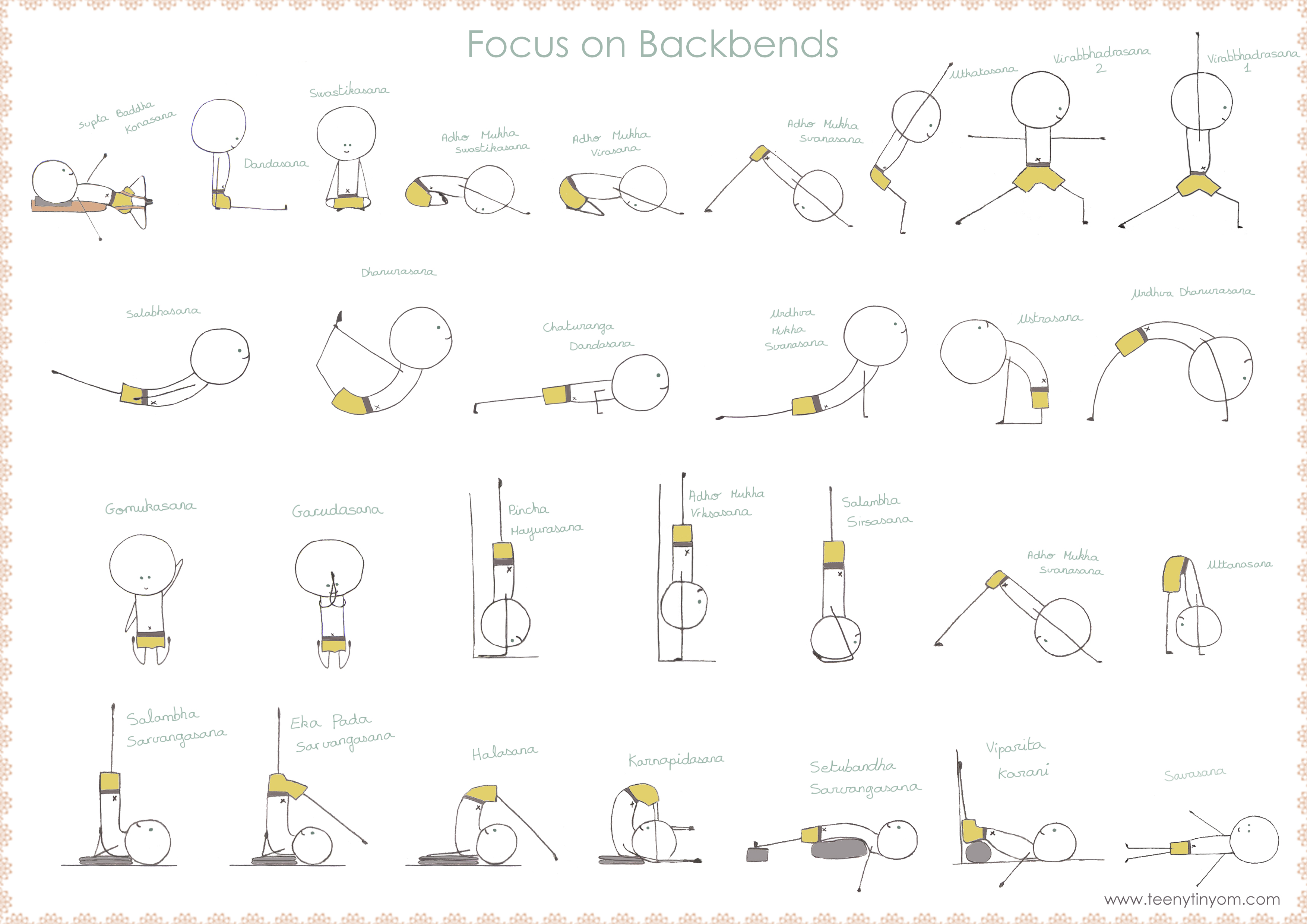
Iyengar Yoga Sequencing

While looking for an image for this blog post, I stumbled upon this excellent  yoga blog  with great sequences and cute drawings! I alrea...