Thursday, March 20, 2014

Four Paths to Liberation


I decided to start reading sections of "Yoga: A Gem for Women" - by the wonderful Geeta Iyengar, BKS Iyengar's daughter - before my yoga practice. The second chapter spoke about the Four Paths of Liberation which resonated with me especially since I'm also reading a book about Buddhism. (Lots of spiritual reading, indeed). I am constantly aware of not being able to retain all the information I've read or heard throughout the years of my long yoga journey. I remembered that there's a good method to retaining education; it's reading, speaking out loud what you read, and writing it down.

"Spiritual knowledge and material knowledge - both are necessary. Pursuit of one at the cost of the other leads to downfall. Material knowledge enables one to face life's problems, whereas spiritual knowledge helps one to realize oneself."

- verse from Isopanisad I. Up. 11.

Four paths to balance material and spiritual knowledge
  1. Knowledge
  2. Action
  3. Devotion
  4. Yoga

Monday, March 10, 2014

Restorative Sequence

Supta Baddha Konasana
- Torso on bolster
- Toes at wall
- Catch elbows overhead
- Then arms at side

Adho Mukha Virasana
- Knees on bolster
- Top of feet on ground
- Fold over, head down
- Buttocks has earth element

Uttanasana
- Feet mat width apart
- Place fingertips on bolster
- Then feet hip width apart
- Head down

Gomukasana

Ardha Sirsasana

Sirsasana

Eka Pada in Salamba Sarvangasana
- Metatarsals on seat of chair

Halasana

Paschimottasana

Uttanasana
- Blocks near feet
- Palms facing up
- Fingers facing back

Viparita Karani

Chant Om
- Set up Queen Pose (below); Sit on bolster
- Cross legs so that the shin flesh moves away from the bone
- Place one foot in front of the other
- Touch thumb and forefinger tip together; palms face up
- Extend first open mouth Om; 3 times
- Then extend last closed mouth Om; 3 times
- MaliMudra? Place thumb tips into ear; lift elbows
- Chant one Om

Queen Pose
- Lie torso on long triple fold blanket on top of long double fold blanket
- Leave space for lower back
- Double fold blanket for head
- Bolster for knees

Monday, March 3, 2014

Namaskar, Backbend, Twist Sequence

2 sutras, 2 aims.
Yoga can bring meditative state to mind.
Remove obstacles and hindrances.

Kleshas

Intellectual

Avidya
Ignorance
Misidentification of true self with personality. You are more eternal than circumstances of daily life

Asmita
Ego
Pride, overblown sense of self.


Emotional

Raga
Attachment to pleasure

Dvesa
Aversion to pain.
Face neutral instead of positive or negative
Buddhism, suffering is from attachment.


Instinctive

Abhinivesah
Fear of death. Clinging to life.
Fear of the unknown.
Notes:

Abisha - discipline
- unattachment
Yoga can coax out of box of comfort zone.
You become attached, fear the unknown. 
Yoga class progress strengths, overcome weakness which boosts confidence and experiences in life.

  1. Bharadvajasana I
  2. Marichyasana III
  3. Baddha Konasana
  4. Namaskar
    • Squat to straighten legs keeping chest close to thighs
    • Uttanasana
    • Adho Mukha Svanasana
    • Runner's Pose
    • Parsvokonasana
    • Runner's Pose
    • Utthita Trikonasana
  5. Adho Mukha Svanasana
    • Place hands facing outward on slanted blocks at wall - 10 o'clock and 2 o'clock
  6. Adho Mukha Vrksasana
    • Same hand position
  7. Viparita Dandasana
    • Eka Pada - Padmasana leg across top of chair back
  8. Dwi Pada Dandasana
    • Half Padmasana on leg, not on chair back as previously
  9. Bharadvajasana II
  10. Paschimottanasana
  11. Yoga Mudra
    • Swastikasana
    • Rest head on bolster
  12. Supta Baddha Konasana

Arm Work Sequence

Sankalpa: Intention, will purpose, determination
Secular prayer at beginning of class sets up the intention for the class.
What's your intention of yoga class?
Less humility - "I don't know. I'd like to learn."
Assumptions = No learning
As you practice more, intention should be deeper. Maybe at first your intention is asana base, eventually may change to more of a spiritual intent.
Yoga means to yoke and unite the body and mind in order to connect the soul.
Yoga is not bio mechanical, it's also psychological. Although Iyengar yoga assists with body alignments, its deeper, too. In Puna, India, they focus on the depth of asana practice.
When practicing, ask what your intention is? It's a good way to ignite your practice.


  1. Virasana
    • Move buttocks down
    • Move abdomen back
    • Lift pubis
  2. Adho Mukha Virasana
    • Classic
    • Press fingertips into floor
  3. Urdva Hastasana
    • Press palms into soft block
    • Move arms back
    • Both these actions = Utkatasana
    • Iyengar says opening armpit chest relieves depression. 
    • Armpit chest is located just below armpit.
  4. Adho Mukha Svanasana
    • Focus on armpit chest
    • Roll triceps under
    • Thumbs together at wall
    • Place head between and through arms
  5. Salabhasana
    • Strap arms just below elbows, slightly narrower than Shoulderstand
  6. Urdhva Mukha Svanasana
  7. Viparita Dandasana
    • On chair
    • Connect arm positions from Salabhasanat
    • Face palms out
    • Catch lower legs of chair
    • Move should-blades down and off of chair
  8. Twist on Chair
  9. Ardha Urdhva Dhanurasana
  10. Ardha Sirsasana
    • T-blocks
  11. Ardha Halasana
    • Use chair
    • Move into Eka Pada
    • Karnapidasana
  12. Marichyasana
  13. Supta Baddha Konasana

Monday, February 3, 2014

Forward Bend Sequence

Supta Tadasana

Supta Matsyendrasana

Bharadvajasana I

Parighasana
- right ball mount on wall

Uttanasana

Parsva Uttanasana
- moving the torso and arms left then right
- lift shoulders

Utthita Trikonasana
- legs on angle
- high block height

Prasarita Padottanasana
- heels back of mat
#1 - Concave back
#2 - Hands on floor
#3 - Head down

Dandasana

Maricyasana III
- one leg is Upvista Konasana

Upvista Konasana

Baddha Konasana

Upvista Konasana
- without blanket
- arms to floor

Parsva Upavista Konasana
- other leg thing moving toward floor
- back ribs in

Baddha Konasana

Parsva Uttansasana

Setu Banda
- soft block
- blankets for shoulders
- top of buttocks toward knee
(sacrum gets worked on a lot with many forward bends)

Supta Baddha Konasana
- arms overhead
- holding unto elbows

Supta Swastikasana
- arms at sides

Savasana
- with bolster

Pranayama

Tuesday, January 28, 2014

Gunas Sequence

Gunas » Qualities

Tamas » Inertia
Rajas » Mobility
Sattva » Clarity

Both tamas and rajas have positive and negative qualities. Yoga balances all three gunas. All gunas are necessary. Don't be quick to judge. Iyengar yoga integrate the body, mind, and soul. Body is the vehicle for yoga practice.

Concave Uttanasana
- bolster for fingers
- think about 3 gunas in different parts of the body

Supta Padangusthasana I
- strap center heel
- other leg bent

Supta Padangusthasana III
- draw heel to buttocks

Supta Padangusthasana variation
- hold unto outer foot bending leg toward floor

Supta Padangusthasana variation
- both legs bent
- right on top of the left
- hold unto left shin

Supta Padangusthasana I
- without strap, hold onto foot

Supta Matsyendrasana

Adho Mukha Virasana

Swastikasana
- head down resting on bolster

Concave Uttanasana
- fingertips on bolster
- head down, holding unto shins
- pulling shins up and lifting shoulders up, releasing head & neck down

Adho Mukha Savasana » Urdhva Prasarita Ekapadasana
- heels on thin rolled blanket at wall
- one leg up in split position
- walk hand in closer to wall

Vidrasana
- Virasana with both knees and thighs together

Adho Mukha Vrkasana

Ardha Sirsasana
- T blocks

Ardha Sirsasana II Mudra
- lift shoulders
- hold onto other feet

Bharadvaja

Marichyasana

Salamba Sarvagasana

Halasana

Supta Swastikasana

Wednesday, January 22, 2014

New Season: Standing Sequence

Supta Baddha Konasana
- torso under lengthwise bolster
- toes at wall
- neck under rolled blanket

Adho Mukha Virasana
- knees on bolster & trifold blanket
- top of feet resting on mat
- head down

Adho Mukha Virasana
- knees on bolster & trifold blanket
- sit on heels
- tuck toes under
- keep torso lifted

Uttanasana
- feet as wide as mat

Innvocation

Utthita Parsvokonasa
- front foot (bent leg) on block
- block for hand

Utthita Parsvokonasa

Utthita Trikonasana

Uttanasana
- concave back
- lift leg into Vibradrasana III w/o extending arms forward
- finger trips on ground

Uttanasana

Ardha Chandrasana
- hand on lowest height block
- foot at wall

Uttanasana

*Add creativity to practice, otherwise it becomes dull

Prasarita Padottanasana

Gomukasana
- turn biceps with other arm toward body

Adha Sirasana
- T-shaped blocks at wall

Viparini Dandasana

Monday, December 16, 2013

Restorative Sequence: Discipline & Surrender

Discussion on duality.
Ying & yang

Supta Baddha Konasana
- w/o strap

Adho Mukha Virasana
- Turn torso to left & then right
- Inner arm extending

Twist
Twist on floor w/groin on bolster

Uttanasana
- Feet width of mat
- Toes in
- Concave back

Uttanasana
- Head down
- Feet hip width apart

Viparini Karini
- End with Baddha Konasana legs
- Then Swastikasana legs

Supta Swastikasana
- Double folded blanket for head
- Trifold blanket for middle torso
- Single fold blanket for legs

Savasana
- Bolster & single fold blanket for head
- Block on 2nd height for upper back
- Seated on double fold blanket

Swastikasana
- Seated on bolster
- one blanket for legs
- one blanket lying on top of thighs with hands resting

Asana practice is preparatory for seated meditation.

Tuesday, November 26, 2013

Gravity & Mobility

Variations of Supta Padangusthasana

Supta Virasana II
Long fold rolled blanket under active leg/hip
#1: Strap at metatarsal
#2: Strap looped around heel and extending behind neck

Baddha Konasana

Upvista Konasana

Utthita Trikonasana
Heel at wall

Uttanasana
Wide leg

Uttanasana

Halasana

Janu Sirasasana
Concave back holding unto outside of foot
#1: Seated on angled double fold blanket
#2: Concave back with double fold blanket under heel
#3: Classic head down & holding both sides of feet

Upvista Konasana
Seated on blanket
Fold over bolster
Extend arms

Supta Baddha Konasana

Sunday, November 24, 2013

Backbend Sequence

Invocation
Discussion on judging body through the thinking mind. 

Ardha Pardva Hastasana
- standing with hand on wall
- rotate wrist so fingers point behind you

Pardva Hastasana

Utthita Trikonasana
- lift from inner wrist
- side up
- deltoid moving down
- mimick same actions from Ardha Pardva Hastasana

Adho Mukha Virasana
- hands on angled block slanted on wall
- roll triceps under

Sun Salutations x10
Urdva Hastasana
Concave Uttanasana
Adho Mukha Svanasana
Uttanasana
Urdvha Hastasana

Dwi Pada Dandasana
- regular 
- arms outstretched then crossed with back of head resting on them

Ardha Urva Danurasana x3
- bolster long resting on back of chair
- hold chair
- feet angled and pressing on bottom of chair legs 
- lift up buttocks
- legs stay parallel
- move into asana then place hands on wall with elbows bent and moving towards each other
- straighten arms and move hands closer to the floor

Removing lethargy 

Cross Bolsters
(combination of Viparita Dandasana & Setu Bandha)
- Rolled blanket under neck which gives a backbend effect 

Viparita Karini

Adho Mukha Virasana
- over lengthwise bolster with abdomen resting on bolster
- turn left
- turn right

Adho Mukha Virasana
- bolster widthwise on ground with forehead resting
- hands touching opposite ends of bolster

Tuesday, November 19, 2013

Restorative Sequence

The Yoga Sutras provides yoga with a thorough and consistent philosophical basis and clarify many important esoteric concepts. In the Sutras, Patanjali prescribes adherence to eight "limbs" or steps (the sum of which constitute "Ashtanga Yoga," the title of the second chapter) to quiet one's mind and achieve kaivalya, "detachment" and "solitude."

Patanjali divided his Yoga Sutras into four chapters or books (pada), containing in all 196 aphorisms.

1. Samadhi Pada
Samadhi refers to a blissful state where the yogi is absorbed into the One.

2. Sadhana Pada
Sadhana is the Sanskrit word for "practice" or "discipline."
Act without attachment to the results or fruit of action and activity.

3. Vibhuti Pada
Vibhuti is the Sanskrit word for "power" or "manifestation." The temptation of powers should be avoided and the attention should be fixed only on liberation.

4. Kaivalya Pada
Kaivalya means "isolation" and stands for emancipation. Describes the process of liberation and the reality of the transcendental ego.

Person seeing
Thing being seen
Act of seeing
All unified in samadhi

Practice in not only in what the body is doing, also add recuperative practice for the mind and soul.

Iyengar practice is a yoga practice you can grow old with, get sick, and change with.


Supta Padangusthasana
- strap bottom of the shoulderblades, just under the armpit
- right arm alongside torso with fist under outer femur pointing toward body
- strap on metatarsals of right foot

Uttanasana w/ Concave Back
- 2 blocks highest height

Uttanasana 
- palms resting 2 blocks highest height, fingers pointing toward body

Uttanasana 
- 1 or 2 blocks for head support
- hold unto ankles
- hips wide apart
- then bend elbows

Ardha Sirsasana
- 2 blocks in T-shape

Uttanasana
- wide legs, feet to edges of mat

Halasana

Upvista Konasana in Halasana 

Supta Baddha Konasana

Forward bends enhance pratyahara since the head is typically down and there's nothing to see and distract your attention inward.

Swastikasana
- seated on bolster with back against wall
- bend down and move buttocks flesh against wall
- triple fold blanket for legs
- change interlace of feet

Savasana
- lie face down on bolster
- rest forehead on double folded blanket

Adho Mukha Virasana
- forehead on bolster

Iyengar Yoga Sequencing

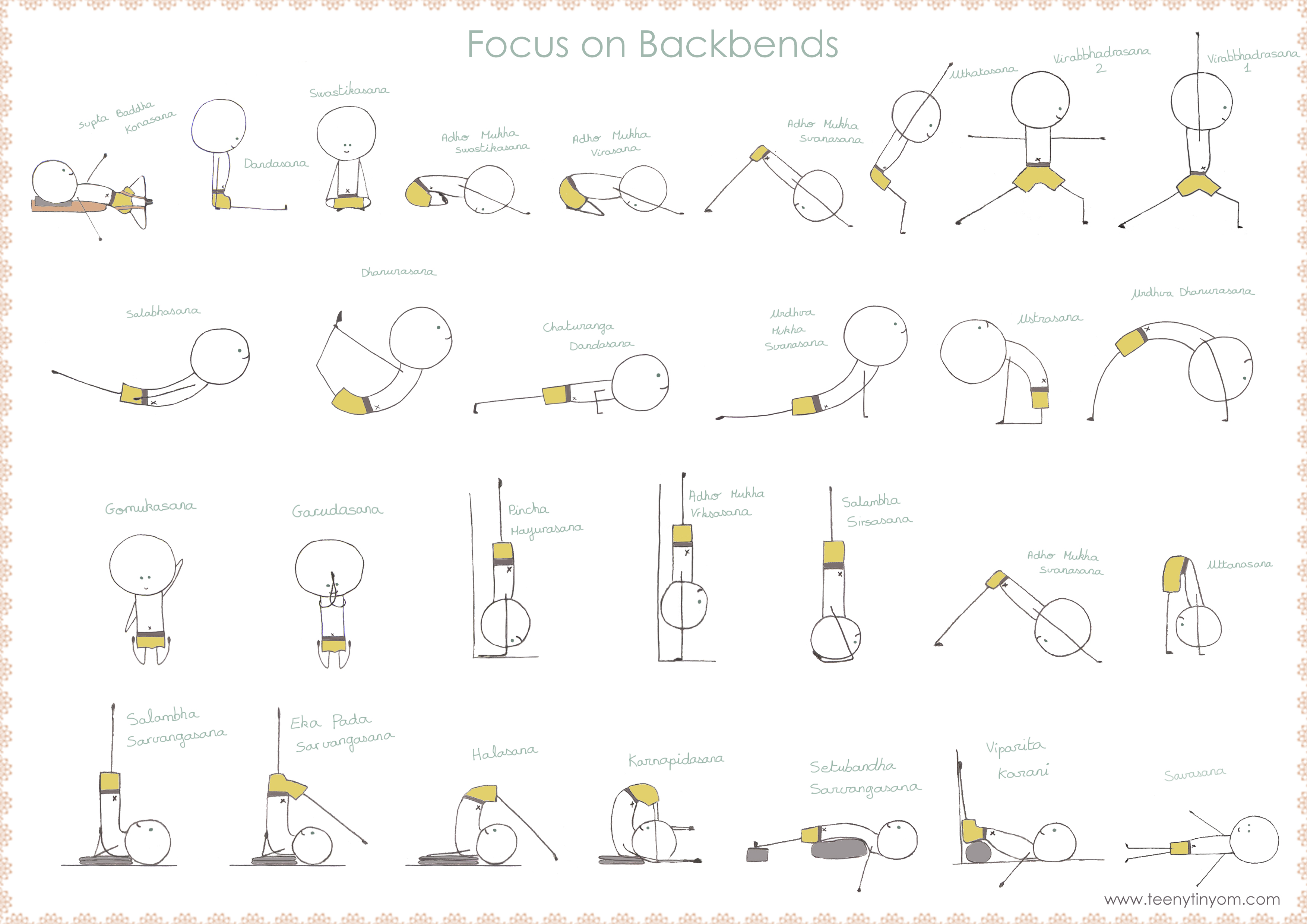
While looking for an image for this blog post, I stumbled upon this excellent  yoga blog  with great sequences and cute drawings! I alrea...